

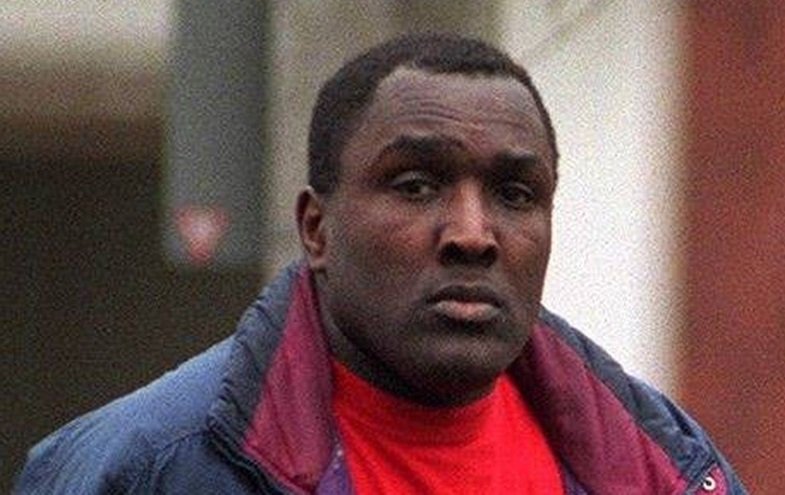
Purple Aki, the infamous Merseyside figure known for his obsession with muscular physiques, has died aged 64 at his Liverpool home. Akinwale Arobieke was found unresponsive at his Toxteth flat on Tuesday evening, 26 August 2025, with police confirming his death was not suspicious.
Death Confirmed in Non-Suspicious Circumstances
Merseyside Police responded to reports of an unresponsive man at Devonshire Road, Princes Park, around 8:30 PM on Tuesday. Purple Aki was pronounced dead at the scene by emergency services. A police spokesperson confirmed the death was not being treated as suspicious and a coroner’s file would be prepared.
The 64-year-old had lived quietly in the Toxteth area in recent years following decades of legal battles. Purple Aki was originally from Crumpsall in North Manchester but became synonymous with Liverpool and Merseyside. His death marks the end of one of Britain’s most notorious urban legends.
Local residents reported seeing emergency vehicles outside his flat on Tuesday evening. Purple Aki had maintained a low profile since his Sexual Offences Prevention Order was lifted in 2016. His death has prompted mixed reactions across social media platforms and local communities.
Legacy of Urban Legend and Legal Battles
Purple Aki became a household name across the North West for his unusual behaviour spanning over three decades. He gained notoriety for approaching young men, particularly bodybuilders, and asking to touch or measure their muscles. These encounters often involved requests for the victims to perform squats whilst he felt their leg muscles.
His reputation spread through local folklore, with stories circulating in schools and communities across Merseyside. Parents would warn children about staying out after dark or Purple Aki would approach them. The tales grew more elaborate with each retelling, creating a modern urban legend.
The BBC documentary “The Man Who Squeezes Muscles” explored his complex story in 2016. Purple Aki complained the programme was racist and had demonised him unfairly. He consistently denied his behaviour had sexual motivations, claiming genuine interest in bodybuilding and fitness.
His distinctive appearance – standing 6 feet 5 inches tall – made him instantly recognisable across the region. Purple Aki typically wore tracksuits and carried blue plastic shopping bags, becoming part of his iconic image.
Criminal History and Court Proceedings
Purple Aki faced numerous legal challenges throughout his adult life, beginning with a controversial manslaughter case in 1986. Sixteen-year-old Gary Kelly died from electrocution at New Brighton railway station whilst allegedly fleeing from Arobieke. He was initially convicted of involuntary manslaughter but successfully appealed the verdict.
The appeal court ruled Arobieke had not acted unlawfully by “standing on the platform and looking into trains”. He received approximately £35,000 compensation due to alleged racial overtones in the prosecution case. This early legal victory established a pattern of successful court challenges.
In 2003, Purple Aki was sentenced to six years imprisonment for harassing 15 men. He pleaded not guilty to 50 counts of indecent assault and harassment against 14 teenage boys in 2001. The court heard evidence of his systematic approach to targeting muscular young men across the region.
A Sexual Offences Prevention Order imposed in 2006 banned him from touching muscles without consent. The order also prohibited him from entering gyms, loitering near sports clubs, and approaching anyone under 18 years old. These restrictions severely limited his movements and activities for a decade.
Social Media Fame and Cultural Impact
Purple Aki achieved unexpected internet fame as social media platforms emerged in the 2000s. Football fans created banners referencing him at Liverpool and Everton matches. Festival-goers brought flags bearing his name to Glastonbury music festival on multiple occasions.
YouTube videos, songs, and cartoons about his exploits proliferated online, cementing his status as a cultural phenomenon. Purple Aki transformed from local urban legend into viral internet sensation. Some people actively sought him out for selfies and social media posts.
The nickname “Purple Aki” itself became controversial, with Arobieke claiming it was racist and offensive. He successfully complained to newspapers about using the term, arguing they wouldn’t refer to Chinese people as “Yellow Wong”. Several publications agreed to avoid the nickname in future reporting.
His distinctive blue shopping bags and tracksuit uniform became instantly recognisable symbols. Purple Aki would often be spotted around Liverpool carrying these bags, adding to his mythological status among local residents.
Legal Victories and Compensation Claims
Purple Aki achieved significant legal victories in his later years, including the lifting of his Sexual Offences Prevention Order in 2016. Manchester Crown Court Judge Richard Mansell QC ruled his behaviour, whilst unusual, was not inherently criminal or sexual in nature.
He successfully sued Greater Manchester Police in 2022 for malicious prosecution and misfeasance in public office. Purple Aki received a substantial payout just weeks before the trial was scheduled to begin at Manchester County Court. The case involved allegations that two officers conducted a campaign to target him unfairly.
Three complaints against Greater Manchester Police were upheld following his accusations of a witch hunt. Purple Aki claimed officers deliberately pursued him to manufacture criminal charges. His civil claim alleged systematic targeting from 2012 onwards by specific officers.
He successfully defended himself in a 2013 harassment trial, demonstrating his legal acumen. Purple Aki instructed Liverpool firm James Murray solicitors to pursue compensation claims against police forces. These victories vindicated his long-standing claims of unfair treatment.
Complex Public Perception and Debate
Purple Aki divided public opinion throughout his notoriety, inspiring both fear and fascination. Some viewed him as a dangerous predator who terrorised young men across the North West. Others saw him as an eccentric figure whose behaviour was misunderstood and exaggerated.
Mental health advocates argued his case highlighted issues around neurodiversity and social boundaries. Purple Aki consistently maintained his interest in muscles stemmed from genuine fascination with bodybuilding rather than sexual motivation. His supporters pointed to the lack of sexual offence convictions as evidence.
Critics argued his persistent behaviour caused genuine distress to victims regardless of his intentions. The Gary Kelly case remained particularly controversial, with the teenager’s family believing Purple Aki bore responsibility for his death. This tragic incident overshadowed debates about his later activities.
Academic discussions emerged about urban legends, folklore, and how modern society processes unusual individuals. Purple Aki became a case study in how single personalities can capture public imagination and generate lasting cultural narratives.
His death has prompted reflection on his complex legacy within Merseyside communities. Purple Aki remains an unforgettable figure whose story encompasses tragedy, controversy, legal battles, and unexpected fame spanning nearly four decades.
Read More: HSBC: Major Banking App Outage Locks Thousands of Customers Out
